Chlorine & Chloramine
Chlorine and chloramine in tap water explained: EPA limits (4 PPM), health effects, why utilities add them, and which filters remove them effectively.
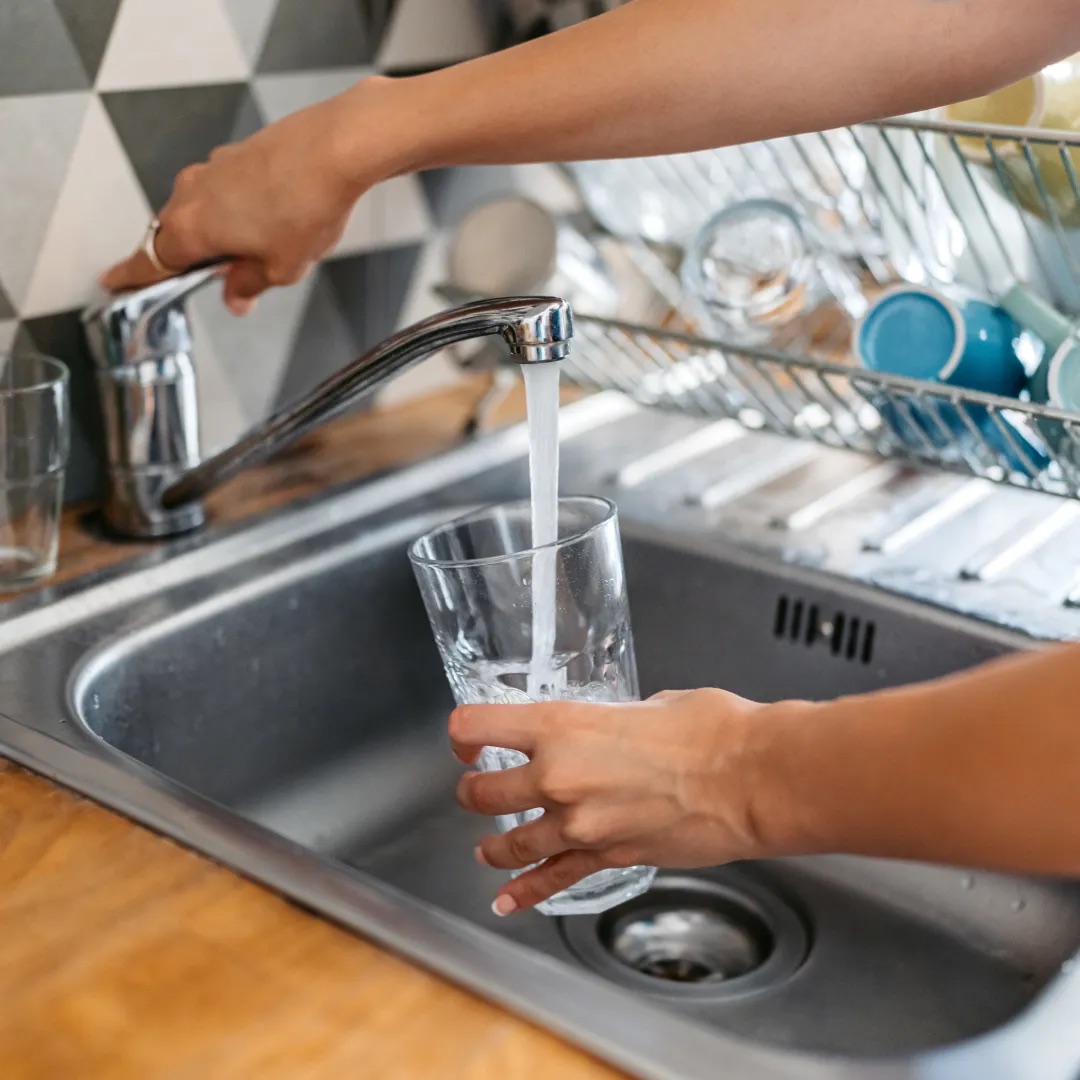
Chlorine and chloramine are disinfectants added to tap water to kill bacteria and pathogens. They are safe at EPA-allowed levels (up to 4 PPM) but cause taste, odor, skin dryness, and hair damage. Activated carbon filters remove chlorine effectively. Chloramine requires catalytic carbon or longer contact time.
What is Chlorine & Chloramine?
Chlorine is the most widely used water disinfectant in the United States. It is added at the treatment plant to kill bacteria, viruses, and parasites, and a residual amount remains in the water as it travels through the distribution system to your tap. Chloramine is a secondary disinfectant made by combining chlorine with ammonia. About 20% of US water systems use chloramine instead of free chlorine because it is more stable in the distribution system and produces fewer disinfection byproducts.
Is Chlorine & Chloramine Dangerous?
At concentrations used in US water treatment (typically 0.5 to 2.5 PPM), chlorine and chloramine are not considered a significant health risk for most people. Long-term exposure to chlorinated water is associated with a small increase in bladder cancer risk, though the evidence is debated. The primary concern is disinfection byproducts (THMs and HAAs) formed when chlorine reacts with organic matter in water. People with certain skin conditions may experience irritation.
EPA MCL is 4 mg/L (PPM) for chlorine (as Cl2) and 4 mg/L for chloramine (as Cl2).
How to Identify Chlorine & Chloramine in Your Water
Chlorine has a distinct bleach-like smell detectable by most people above 1 PPM. Chloramine has a milder chemical smell. Home test strips ($10 to $15) measure both free chlorine and total chlorine. The difference between total and free chlorine indicates chloramine presence.
How Chlorine & Chloramine Is Regulated
The EPA MCL for chlorine (as free chlorine) is 4 mg/L. The MCL for chloramine (as chlorine residual) is also 4 mg/L. Most utilities maintain residuals of 0.5 to 2.5 PPM, well below the limit. The EPA also regulates disinfection byproducts: total trihalomethanes (TTHMs) at 80 PPB and haloacetic acids (HAA5) at 60 PPB.
| Standard | Limit | Notes |
|---|---|---|
| EPA MCL | 4 PPM | EPA MCL is 4 mg/L (PPM) for chlorine (as Cl2) and 4 mg/L for chloramine (as Cl2). |
| Health Guideline (MCLG) | 4 PPM | Health-based target; not enforceable |
How to Remove Chlorine & Chloramine
- Whole-House Carbon Filter Recommended — 99%+ removal of chlorine; requires catalytic carbon for chloramine · Whole house
- Under-Sink Carbon Filter — 99%+ removal at drinking tap · Single tap
- Pitcher Filter — Good for chlorine; limited for chloramine unless specified · Drinking water only
- Reverse Osmosis — Removes chlorine via carbon pre-filter stage · Single tap
Chlorine & Chloramine Levels in US Cities
| City | State | Level | Rating |
|---|---|---|---|
| Houston | TX | 2.10 PPM | Typical |
| San Diego | CA | 2.00 PPM | Typical |
| Fort Worth | TX | 2.00 PPM | Typical |
| Killeen | TX | 2.00 PPM | Typical |
| Fort Lauderdale | FL | 2.00 PPM | Typical |
| South Tampa | FL | 2.00 PPM | Typical |
| Jackson Downtown | MS | 2.00 PPM | Typical |
| Dallas | TX | 1.90 PPM | Typical |
| Fort Lauderdale Beach | FL | 1.90 PPM | Typical |
| Los Angeles | CA | 1.80 PPM | Typical |
| Las Vegas | NV | 1.80 PPM | Typical |
| New Orleans | LA | 1.80 PPM | Typical |
| Riverside | CA | 1.80 PPM | Typical |
| Plano | TX | 1.80 PPM | Typical |
| Irving | TX | 1.80 PPM | Typical |
| Frisco | TX | 1.80 PPM | Typical |
| McKinney | TX | 1.80 PPM | Typical |
| Pomona | CA | 1.80 PPM | Typical |
| Daytona Beach | FL | 1.80 PPM | Typical |
| College Station | TX | 1.80 PPM | Typical |
Top 20 of 596 cities above 1 PPM in our database of 1000 cities. Look up your city.
Frequently Asked Questions
Does letting water sit remove chlorine?
Is chloramine worse than chlorine?
Do shower filters remove chlorine?
Sources
- EPA Disinfectant and Disinfection Byproduct Rules — EPA limits
- EPA Chloramines in Drinking Water — Chloramine usage
- WHO Chlorine in Drinking-water Guidelines — Health effects
Related
Problems: Chlorine
Other Contaminants: Trihalomethanes
Treatment: Whole-House Carbon Filter · Under-Sink Carbon Filter · Pitcher Filter · Reverse Osmosis