Trihalomethanes
Trihalomethanes (THMs) explained: the four compounds, the 80 ppb EPA limit, bladder-cancer risk, and how to remove them with an NSF/ANSI 53 certified carbon or RO filter.
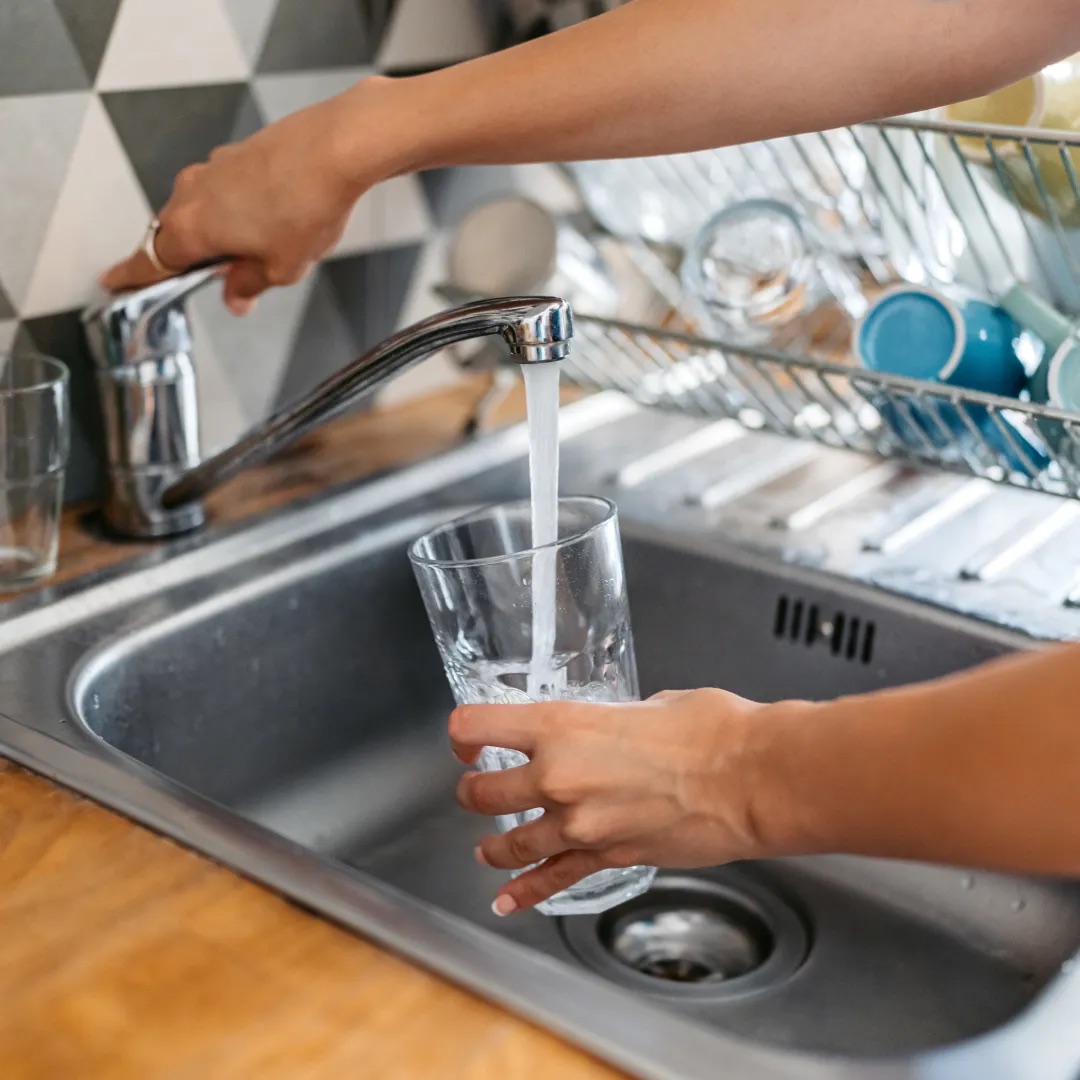
Trihalomethanes (THMs) are disinfection byproducts that form when chlorine reacts with natural organic matter in water. The four regulated compounds (chloroform, bromodichloromethane, dibromochloromethane, and bromoform) are measured together as total trihalomethanes (TTHMs), which the EPA limits to 80 parts per billion. Long-term exposure is associated with an increased risk of bladder cancer. To remove THMs, use a filter certified to NSF/ANSI 53 for VOC reduction: a carbon block filter, whole-house activated carbon system, or reverse osmosis system reduces them effectively.
What is Trihalomethanes?
Trihalomethanes are a group of four chemical compounds (chloroform, bromodichloromethane, dibromochloromethane, and bromoform) that form as unintended byproducts when chlorine or chloramine reacts with naturally occurring organic matter in the water supply. They are the most common class of disinfection byproducts (DBPs) in chlorinated drinking water. Total trihalomethanes (TTHMs) is the sum of all four compounds.
Is Trihalomethanes Dangerous?
The EPA classifies several THMs as probable human carcinogens. Long-term exposure to THMs at elevated levels is associated with increased risk of bladder cancer. Some studies also suggest associations with colorectal cancer, adverse reproductive outcomes (including miscarriage and low birth weight), and liver and kidney effects. THM exposure occurs through ingestion, inhalation (during showers), and dermal absorption.
EPA MCL is 80 PPB for total trihalomethanes (TTHMs) as a running annual average.
How to Identify Trihalomethanes in Your Water
THMs cannot be reliably detected by taste or smell at regulatory levels. Laboratory testing is required for precise measurement. Your utility's CCR reports TTHM levels as a running annual average. This is the most practical way to assess your exposure.
How Trihalomethanes Is Regulated
The EPA MCL for total trihalomethanes is 80 PPB, measured as a running annual average across monitoring points in the distribution system. The EPA also regulates haloacetic acids (HAA5) at 60 PPB. Both are part of the Stage 2 Disinfectants and Disinfection Byproducts Rule. The MCLG for chloroform is 70 PPB; the MCLG for dibromochloromethane is 60 PPB; MCLGs for bromodichloromethane and bromoform are zero.
| Standard | Limit | Notes |
|---|---|---|
| EPA MCL | 80 PPB | EPA MCL is 80 PPB for total trihalomethanes (TTHMs) as a running annual average. |
| Health Guideline (MCLG) | 0 PPB | Health-based target; not enforceable |
How to Remove Trihalomethanes
- Activated Carbon Filter Recommended — Effective removal, especially with carbon block · Whole house or point of use
- Reverse Osmosis — 90%+ removal via carbon pre-filter and membrane · Single tap
- Pitcher Filter — Moderate reduction with standard carbon · Drinking water only
Recommended Systems to Reduce Trihalomethanes
These treatment methods are proven to reduce trihalomethanes. Whole-house systems treat every tap; point-of-use units treat drinking water only.
CheckMyTap may earn a commission if you buy through these links, at no extra cost to you. Full disclosure
Frequently Asked Questions
Does boiling remove THMs?
Are THMs worse in hot water?
Do chloramine systems have lower THMs?
What filter removes trihalomethanes?
Do Brita or PUR pitchers remove THMs?
Sources
- EPA Stage 2 DBPR — EPA regulation
- EPA Integrated Risk Information System — Cancer classification
- WHO Trihalomethanes in Drinking-water — Health effects
Related
Problems: Chlorine
Other Contaminants: Chlorine & Chloramine · PFAS
Treatment: Activated Carbon Filter · Reverse Osmosis · Pitcher Filter