Is Cottonwood Heights, UT Tap Water Safe to Drink?
Yes, Cottonwood Heights tap water is safe to drink. No contaminants exceed health guidelines. However, Cottonwood Heights has very hard water at 250 PPM, which will cause scale buildup in plumbing and appliances over time. A water softener is worth considering.
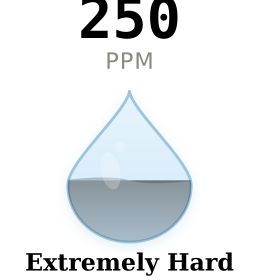
Hardness Scale: Where Cottonwood Heights Falls
0Slightly
60Moderate
120Hard
180Very Hard
250Extreme
400+
How Cottonwood Heights Compares
Cottonwood Heights's water is 81% harder than the national average of 138 PPM. It ranks #189 out of 1000 cities in our database (harder than 81% of US cities we track). Within Utah, it ranks #8 of 19 cities (4% above the state average of 241 PPM). Among smaller cities, Cottonwood Heights ranks #52 of 288 for hardness. At this hardness level, water heaters run an estimated 46% less efficiently due to scale insulation, and major water-using appliances typically last 4 years less than the national average lifespan.
What Cottonwood Heights's Water Means for Your Home
Hardness: 250 PPM - Treatment Recommended
Cottonwood Heights has some extremely hard water. At 250 PPM (14.6 grains per gallon), your tap is loaded with dissolved calcium and magnesium picked up from underground limestone and dolomite formations. Here's the thing: it's perfectly safe to drink. The minerals won't hurt you. But they will hurt your wallet. That adds up. Hard water at 250 PPM increases household costs through scale-coated water heaters that use more energy, extra soap and detergent, and appliances that wear out faster. Most Cottonwood Heights homeowners don't realize it until the plumber shows up. That's 4% harder than the Utah average.
Contaminants & Safety
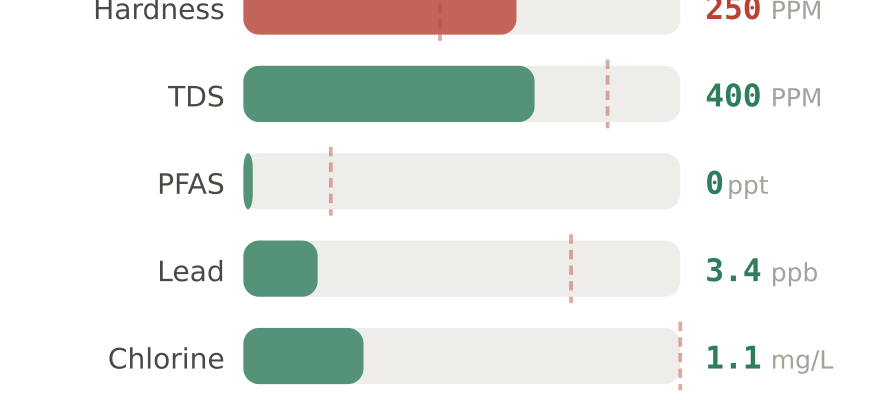
Beyond hardness, Cottonwood Heights's water is within EPA guidelines for regulated contaminants. Chlorine sits at 1.1 mg/L — normal for municipal systems, but enough to notice. 2 contaminants exceed EWG's stricter health guidelines, though all are within legal limits. If your water tastes like a pool or your skin feels dry after showers, a whole-house carbon filter is the simplest fix. A shower filter is a quick, affordable starting point that most people notice immediately. Want the full picture? Request your utility's annual Consumer Confidence Report for neighborhood-level data.
How Hard Water Affects Your Home
At 250 PPM, untreated hard water has measurable effects on household costs and appliance life:
- Water heater inefficiency: Scale insulation forces the heater to work harder (DOE estimates up to 22% more energy for heavily scaled units)
- Soap and detergent: Hard water reduces lathering, requiring significantly more product
- Appliance replacement: Water heaters, dishwashers, and washing machines fail 2-4 years earlier due to scale buildup
- Plumbing maintenance: Scale buildup in pipes reduces flow and requires more frequent service
Note: Impact varies by household size, water usage, and local energy costs. A home water test provides the most accurate assessment for your specific situation.
| Contaminant | Detected | Health Guideline | Legal Limit | Status |
|---|---|---|---|---|
| Hardness (as CaCO₃) | 250 PPM | < 60 PPM | No federal limit | ⚠ Very Hard |
| Total Dissolved Solids | 400 PPM | < 300 PPM | 500 PPM | ⚠ Elevated |
| PFAS (total) | Not tested | — | No total limit | N/A |
| Lead | 3.4 ppb | 0 ppb (no safe level) | 15 ppb (10 ppb in 2027) | ✓ Low |
| Chlorine / Chloramine | 1.1 mg/L | Taste threshold ~1.0 | 4.0 mg/L | ✓ Normal |
| Nitrate | 1.42 mg/L | 5 mg/L | 10 mg/L | ✓ OK |
Recommendations for Cottonwood Heights Homes
Our Top Picks for Cottonwood Heights (250 PPM)
Hard water at 250 PPM causes scale buildup, increased energy use, and premature appliance failure. A softener protects your plumbing and appliances.
Quick Fix for Chlorine: Shower Filter
At 1.1 mg/L chlorine, many Cottonwood Heights residents notice dry skin, brittle hair, and that "pool smell" in the shower. A shower filter installs in 5 minutes, no tools needed.
How to Test Your Water in Cottonwood Heights
With 250 PPM hardness, a quick test strip confirms whether your specific tap matches Cottonwood Heights's average before you invest in a softener. Hardness can vary within the same system.
Free option: Request Cottonwood Improvement District's annual Consumer Confidence Report for official city-level data.
📊 Already Tested Your Water?
City averages miss neighborhood-level variation. Share your results to help your neighbors get better data.
We review every submission before publishing. Your ZIP is shown; your identity is not.
About Cottonwood Heights's Water Supply
Water Utility: Cottonwood Improvement District
Water Source: Big Cottonwood Creek + wells (Groundwater)
Population Served: 3,145
Hardness: 250 PPM (14.6 grains per gallon)
Cottonwood Heights draws its drinking water from groundwater sources — Big Cottonwood Creek + wells. Groundwater typically requires less treatment than surface water because the earth acts as a natural filter. The tradeoff: dissolved minerals from underground rock formations, which is why hardness is elevated here. Calcium and magnesium dissolve into the water as it moves through limestone and dolomite. The system serves 3,000 residents.
Water quality can vary by neighborhood and season. For your exact numbers, request Cottonwood Improvement District's Consumer Confidence Report (CCR) or test your own tap.
ZIP Codes Covered by This Report
This water quality data applies to all areas served by Cottonwood Improvement District in Cottonwood Heights, UT, including ZIP codes:
84017, 84036, 84049, 84055, 84060, 84061, 84068, 84098
If your ZIP code is listed above, this report covers your water supply. Water quality may vary slightly by neighborhood.
Water Softener Sizing for Cottonwood Heights
At 250 PPM (14.6 GPG), here is how to size a softener for your Cottonwood Heights home. Multiply hardness in GPG (14.6) by daily water usage (roughly 50 gallons per person). A family of four uses about 200 gallons/day: 14.6 GPG × 200 gal = 2920 grains/day. Over a 7-day regeneration cycle, that is 20,440 grains - a 32,000-grain softener is the right fit for most Cottonwood Heights households.
Compare Cottonwood Heights to Other Utah Cities
Frequently Asked Questions About Cottonwood Heights Water
Is Cottonwood Heights tap water safe to drink?
Where does Cottonwood Heights's water come from?
Do I need a water softener in Cottonwood Heights?
Does Cottonwood Heights water damage tankless water heaters?
How much does hard water cost a Cottonwood Heights household per year?
What is the hardness of Cottonwood Heights water in grains per gallon?
What size water softener do I need for Cottonwood Heights?
Salt-based softener or salt-free conditioner for Cottonwood Heights?
Data sources: Lead and copper data from EPA Safe Drinking Water Act LCR reporting. Contaminant data from utility-reported testing results. PFAS data from EPA UCMR5 (2023–2025). Hardness from USGS and municipal reports. Data reflects system-level testing results and may not match your specific tap due to neighborhood plumbing, season, or recent utility changes. For your utility's latest results, request their Consumer Confidence Report (CCR). Our methodology. Last updated: 2026-02-24.
What Cottonwood Heights Homeowners Actually Buy
Common purchases for homes with 250 PPM water.
Affiliate disclosure: we may earn a commission. Selection based on Cottonwood Heights's water data.