Is West Linn, OR Tap Water Safe to Drink?
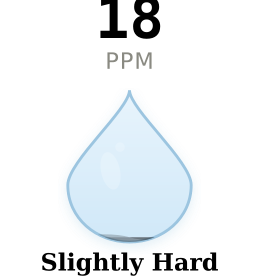
Yes, West Linn tap water is safe to drink. Hardness is low at 18 PPM, and no contaminants exceed health guidelines. Most homes here don't need treatment.
Hardness Scale: Where West Linn Falls
0Slightly
60Moderate
120Hard
180Very Hard
250Extreme
400+
How West Linn Compares
West Linn's water is 87% softer than the national average of 138 PPM - ranking in the bottom 95% for hardness nationwide. Most homes here do not need a softener. Within Oregon, it ranks #37 of 48 cities (28% below the state average of 25 PPM). Among smaller cities, West Linn ranks #268 of 288 for hardness.
What West Linn's Water Means for Your Home
Hardness: 18 PPM - Low Concern
West Linn's water is slightly hard at 18 PPM. Most households won't notice any issues at this level. Scale buildup is minimal, and a water softener would be overkill. West Linn is softer than 95% of US cities. If you're thinking about water treatment, contaminant filtration is where to focus your money, not softening.
Contaminants & Safety
Disinfection byproducts are the notable finding here. West Linn's water has TTHMs at 44.3 ppb and HAA5 at 35.9 ppb — both within legal limits, but the EWG health guidelines are far stricter. These byproducts form when chlorine reacts with organic matter during treatment. A whole-house activated carbon filter reduces both chlorine and its byproducts. Want the full picture? Request your utility's annual Consumer Confidence Report.
What's in the Treatment Process
West Linn's surface water supply requires heavy chlorination to stay safe — but that creates a tradeoff. The treatment process generates disinfection byproducts: TTHMs at 44.3 ppb (55% of the legal limit, but 296x the EWG guideline) and HAA5 at 35.9 ppb (60% of the legal limit, but 359x the EWG guideline). These are within legal limits, but the EWG sets much tighter thresholds based on cancer-risk research. A whole-house activated carbon filter reduces both chlorine and byproducts.
Chromium-6 was detected at 0.142 ppb, which is 7.1x the EWG health guideline. There's no separate federal limit for chromium-6, only total chromium. A reverse osmosis system is the most effective removal method. All measurements are within federal legal limits. The EWG guidelines represent a more conservative, health-based standard.
| Contaminant | Detected | Health Guideline | Legal Limit | Status |
|---|---|---|---|---|
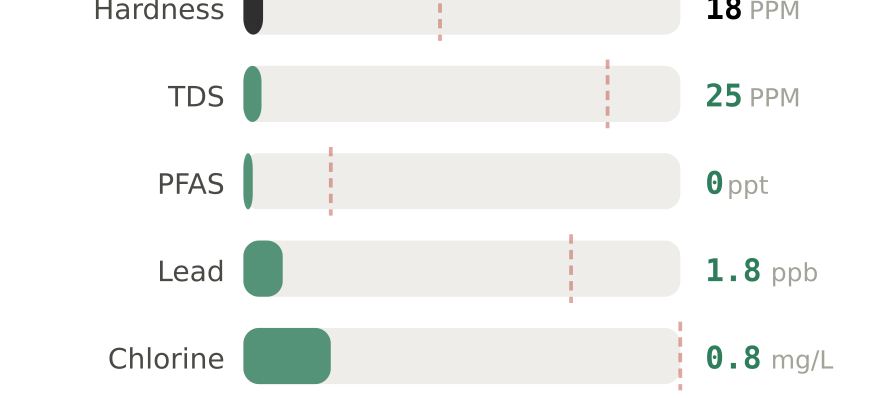
| Hardness (as CaCO₃) | 18 PPM | < 60 PPM | No federal limit | ✓ OK |
| Total Dissolved Solids | 25 PPM | < 300 PPM | 500 PPM | ✓ OK |
| PFAS (total) | 0 ppt | — | No total limit | ✓ ND |
| ↳ PFOA | 0 ppt | 0 ppt | 4 ppt (2024) | ✓ OK |
| ↳ PFOS | 0 ppt | 0 ppt | 4 ppt (2024) | ✓ OK |
| Lead | 1.8 ppb | 0 ppb (no safe level) | 15 ppb (10 ppb in 2027) | ✓ Low |
| Chlorine / Chloramine | 0.8 mg/L | Taste threshold ~1.0 | 4.0 mg/L | ✓ Normal |
| Nitrate | 0.215 mg/L | 5 mg/L | 10 mg/L | ✓ OK |
Good news for West Linn residents. Your water quality is generally good. Most homes in this area do not need a water softener. If you have concerns about lead (especially in buildings constructed before 1986) or chlorine taste, a point-of-use filter is the most practical and cost-effective solution.
How to Test Your Water in West Linn
City-wide data is a solid starting point, but your specific tap might differ based on plumbing age, distance from the treatment plant, or seasonal changes.
Free option: Request South Fork Water Board's annual Consumer Confidence Report for official city-level data.
📊 Already Tested Your Water?
City averages miss neighborhood-level variation. Share your results to help your neighbors get better data.
We review every submission before publishing. Your ZIP is shown; your identity is not.
About West Linn's Water Supply
Water Utility: South Fork Water Board
Water Source: Clackamas River (Surface Water)
Population Served: 28,000
Hardness: 18 PPM (1.1 grains per gallon)
West Linn's drinking water comes from surface sources — Clackamas River. Surface water requires more extensive treatment than groundwater, including coagulation, filtration, and disinfection. This heavier chlorination is why disinfection byproducts tend to be higher in surface-supplied systems. On the upside, surface sources often deliver softer water than deep aquifers. The system serves 28,000 residents.
Water quality can vary by neighborhood and season. For your exact numbers, request South Fork Water Board's Consumer Confidence Report (CCR) or test your own tap.
ZIP Codes Covered by This Report
This water quality data applies to all areas served by South Fork Water Board in West Linn, OR, including ZIP codes:
97027, 97068
If your ZIP code is listed above, this report covers your water supply. Water quality may vary slightly by neighborhood.
Compare West Linn to Other Oregon Cities
Frequently Asked Questions About West Linn Water
Is West Linn tap water safe to drink?
Where does West Linn's water come from?
Do I need a water softener in West Linn?
What are disinfection byproducts in West Linn's water?
Is chromium-6 in West Linn's water?
Can I drink West Linn tap water straight from the faucet?
What water filter is best for West Linn?
Data sources: Lead and copper data from EPA Safe Drinking Water Act LCR reporting. Contaminant data from utility-reported testing results. PFAS data from EPA UCMR5 (2023–2025). Hardness from USGS and municipal reports. Data reflects system-level testing results and may not match your specific tap due to neighborhood plumbing, season, or recent utility changes. For your utility's latest results, request their Consumer Confidence Report (CCR). Our methodology. Last updated: 2026-02-24.