Is Kailua, HI Tap Water Safe to Drink?
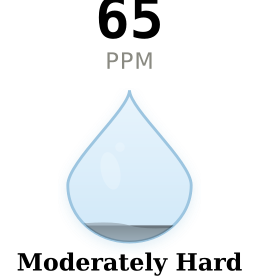
Yes, Kailua tap water is safe to drink. Hardness is low at 65 PPM, and no contaminants exceed health guidelines. Most homes here don't need treatment.
Hardness Scale: Where Kailua Falls
0Slightly
60Moderate
120Hard
180Very Hard
250Extreme
400+
How Kailua Compares
Kailua's water is 53% softer than the national average of 138 PPM - ranking in the bottom 65% for hardness nationwide. Most homes here do not need a softener. Within Hawaii, it ranks #4 of 7 cities (23% above the state average of 53 PPM). Among smaller cities, Kailua ranks #153 of 288 for hardness.
What Kailua's Water Means for Your Home
Hardness: 65 PPM - Low Concern
Kailua's water is moderately hard at 65 PPM. You'll see some spotting on glassware and a film on shower doors over time, but it's not the kind of hardness that demands a full softener. The minerals come from the local aquifer geology. A salt-free conditioner is worth considering if you have a tankless water heater or high-end fixtures.
Contaminants & Safety
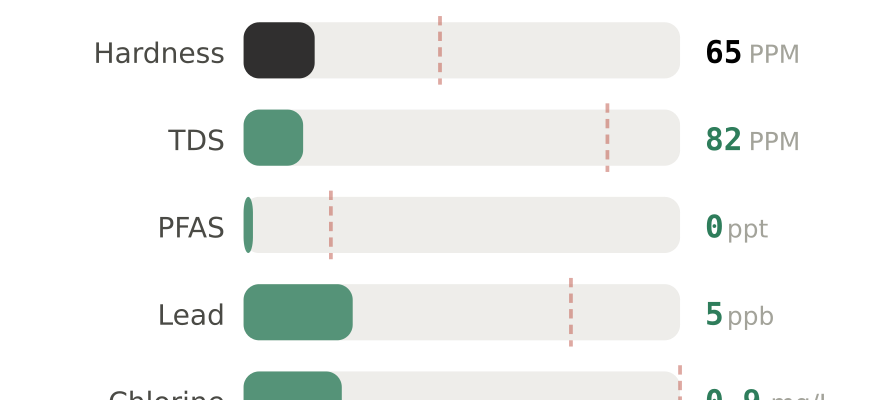
Lead levels deserve attention. At 5 ppb, Kailua is above the ideal of zero, though below the EPA action level of 15 ppb (dropping to 10 ppb in November 2027 under the Lead and Copper Rule Improvements). The lead typically comes from aging service lines or interior plumbing, not the treatment plant. A point-of-use filter certified for lead at the kitchen faucet is a practical safeguard, especially in older homes.
| Contaminant | Detected | Health Guideline | Legal Limit | Status |
|---|---|---|---|---|
| Hardness (as CaCO₃) | 65 PPM | < 60 PPM | No federal limit | ✓ OK |
| Total Dissolved Solids | 82 PPM | < 300 PPM | 500 PPM | ✓ OK |
| PFAS (total) | Not tested | — | No total limit | N/A |
| Lead | 5 ppb | 0 ppb (no safe level) | 15 ppb (10 ppb in 2027) | ✓ Low |
| Chlorine / Chloramine | 0.9 mg/L | Taste threshold ~1.0 | 4.0 mg/L | ✓ Normal |
| Nitrate | Not reported | 5 mg/L | 10 mg/L | N/A |
Recommendations for Kailua Homes
How to Test Your Water in Kailua
Lead enters water from your home's plumbing, not the treatment plant — so Kailua's city-wide average of 5 ppb may not match your tap. Testing your specific faucet is the only way to know. Run cold water for 30 seconds before collecting a sample.
Free option: Request Honolulu Board of Water Supply's annual Consumer Confidence Report for official city-level data.
📊 Already Tested Your Water?
City averages miss neighborhood-level variation. Share your results to help your neighbors get better data.
We review every submission before publishing. Your ZIP is shown; your identity is not.
About Kailua's Water Supply
Water Utility: Honolulu Board of Water Supply
Water Source: Windward Oahu wells (Groundwater)
Population Served: 90
Hardness: 65 PPM (3.8 grains per gallon)
Kailua draws its drinking water from groundwater sources — Windward Oahu wells. Groundwater typically requires less treatment than surface water because the earth acts as a natural filter. The tradeoff: dissolved minerals from underground rock formations, which is why mineral content varies by aquifer depth and geology. The geological profile determines hardness, iron, and trace mineral levels. The system serves 90 residents.
Water quality can vary by neighborhood and season. For your exact numbers, request Honolulu Board of Water Supply's Consumer Confidence Report (CCR) or test your own tap.
ZIP Codes Covered by This Report
This water quality data applies to all areas served by Honolulu Board of Water Supply in Kailua, HI, including ZIP codes:
96729, 96730, 96732, 96733, 96734, 96742, 96744, 96748, 96757, 96761, 96767, 96770, 96784, 96793, 96795, 96863
If your ZIP code is listed above, this report covers your water supply. Water quality may vary slightly by neighborhood.
Compare Kailua to Other Hawaii Cities
Frequently Asked Questions About Kailua Water
Is Kailua tap water safe to drink?
Where does Kailua's water come from?
Do I need a water softener in Kailua?
What is the hardness of Kailua water in grains per gallon?
Can I drink Kailua tap water straight from the faucet?
What water filter is best for Kailua?
Data sources: Lead and copper data from EPA Safe Drinking Water Act LCR reporting. Contaminant data from utility-reported testing results. PFAS data from EPA UCMR5 (2023–2025). Hardness from USGS and municipal reports. Data reflects system-level testing results and may not match your specific tap due to neighborhood plumbing, season, or recent utility changes. For your utility's latest results, request their Consumer Confidence Report (CCR). Our methodology. Last updated: 2026-02-24.