Salt-Free Water Conditioners
TAC systems that prevent scale without removing minerals. Zero maintenance, no salt, no waste water.
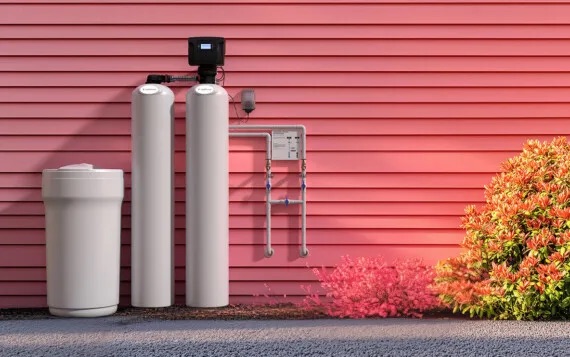
A salt-free water conditioner does not remove hardness minerals from your water. Instead, it changes their structure so they are less likely to form scale on surfaces and inside pipes. The most common and best-tested technology is template-assisted crystallization (TAC), where water passes through a media that converts dissolved calcium and magnesium into microscopic crystals that stay suspended in the water rather than sticking to surfaces.
This distinction matters. Your water will still test as hard, your soap will still behave as it does in hard water, and you may still see some spotting on glass. But the scale buildup in pipes, water heaters, and appliances is significantly reduced. If you need true softening (completely scale-free fixtures, improved soap lather, spot-free dishes), a salt-based water softener is the better option.
How TAC Technology Works
TAC media consists of small polymeric beads with nucleation sites on their surface. As hard water flows through, dissolved calcium and magnesium ions are attracted to these sites and form stable, inactive crystals (typically aragonite form of calcium carbonate). Once the crystals reach a certain size, they release from the media and flow with the water.
These crystals are chemically stable and do not easily revert to their dissolved, scale-forming state. They pass through your plumbing without adhering to surfaces the way dissolved hardness minerals do. The media does not get consumed in this process and does not require regeneration, backwashing, or chemical replenishment.
What It Solves
Scale prevention in pipes and appliances is the primary benefit. Studies from Arizona State University and the WateReuse Research Foundation have shown TAC systems reduce scale formation by 90% or more compared to untreated hard water. This protects water heaters, tankless heaters, dishwashers, and plumbing from the efficiency losses and premature failure caused by scale buildup.
The maintenance appeal is significant. A salt-free conditioner requires no salt, no electricity, no drain connection, no backwash cycle, and no regular consumable replacements. The TAC media typically lasts 3 to 6 years depending on water quality and flow volume. When it expires, you replace the media cartridge or tank.
What It Does NOT Solve
Soap performance does not improve. Because hardness minerals are still present in the water (just in a different form), soap will still not lather as freely as it would in truly soft water. Laundry, skin feel, and shampoo performance remain similar to untreated hard water.
Spotting on glass and fixtures is reduced but not eliminated. You will still see some mineral spots on shower doors and dishes, though typically less than with untreated water.
Existing scale is not removed. A salt-based softener gradually dissolves existing light scale deposits. A salt-free conditioner does not. If you have heavy existing scale, it will remain in place.
Like softeners, salt-free conditioners do not filter contaminants. They do not address chlorine, lead, PFAS, bacteria, or any other water quality issue beyond scale prevention. If you have contaminant concerns, you need a separate filtration system.
When a Salt-Free Conditioner Is the Right Choice
A salt-free system makes the most sense when your hardness is moderate (under 15 GPG / 250 PPM), as TAC performance decreases at very high hardness levels. It is also a good fit when local regulations restrict salt-based softeners due to brine discharge, when you want zero maintenance and no ongoing salt purchases, when you prefer to avoid adding sodium to your water, or when you do not have a drain connection available for softener regeneration.
If your hardness is above 15 GPG, or if soap lather, spot-free surfaces, and the "soft water feel" are priorities for you, a salt-based softener will deliver better results.
Sizing
Salt-free conditioners are sized by flow rate (gallons per minute), not grain capacity. You need a system that can handle your household's peak flow rate without restricting water pressure.
A typical household with 1 to 3 bathrooms needs 10 to 15 GPM flow capacity. Larger homes with 4+ bathrooms should look for 15 to 20 GPM. Check the manufacturer's specified service flow rate, not just the peak flow rating. The service flow rate is the flow at which the system operates within its designed contact time for effective conditioning.
Cost Breakdown
System cost ranges from $800 to $2,000 for a whole-house TAC unit. Installation is $150 to $400, typically simpler than a softener because no drain or electrical connection is needed. There are no ongoing salt costs, no increased water usage, and no electricity costs.
The only recurring cost is media replacement every 3 to 6 years ($100 to $400 depending on the system). Total 5-year cost is typically $950 to $2,500, compared to $1,000 to $3,500 for a salt-based softener over the same period. The cost advantage grows over time due to the absence of salt and water expenses.
Common Misconceptions
Some products marketed as "salt-free water softeners" are not TAC systems at all. Magnetic and electronic water conditioners claim to alter mineral behavior using magnetic fields or electrical pulses. Independent testing of these devices has not produced consistent evidence of effectiveness. If a product does not use TAC media (or a similarly tested physical process), approach the claims with skepticism.
TAC is sometimes also labeled as "nucleation-assisted crystallization" (NAC) or sold under brand names like NextScaleStop, OneFlow, or Template Assist. The underlying technology is the same.
Top Salt-Free Water Conditioners We Review
See comparisons
See comparisons