Reverse Osmosis Systems
Under-sink or whole-house systems that remove up to 99.9% of dissolved solids. The purest drinking water possible.
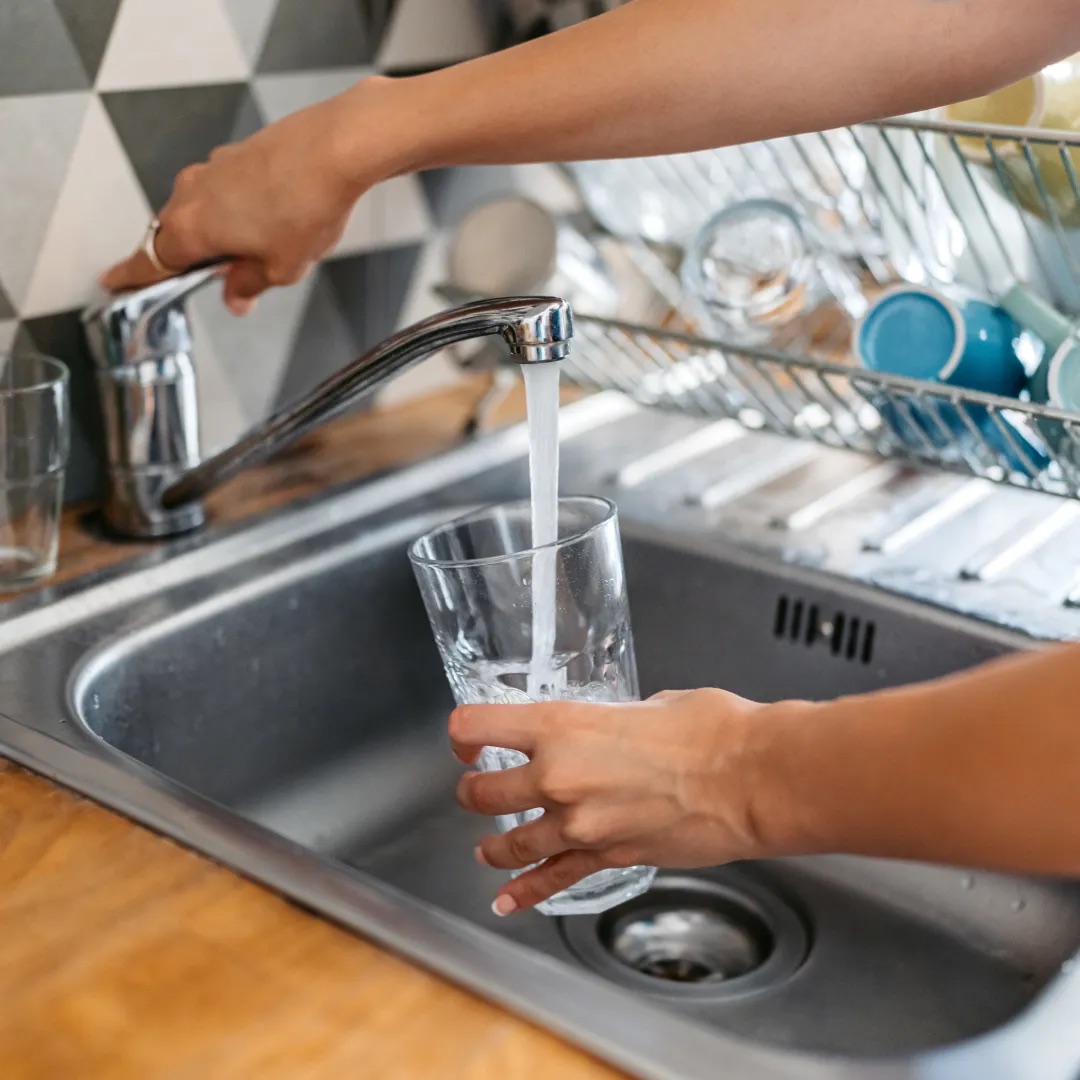
Reverse osmosis (RO) is the most thorough water purification technology available for residential use. It forces water through a semipermeable membrane with pores small enough to block the vast majority of dissolved contaminants, producing water that is 90% to 99% free of dissolved solids, heavy metals, PFAS, nitrate, arsenic, fluoride, and most other contaminants of concern.
Most home RO systems are installed under the kitchen sink and treat water at a single tap used for drinking and cooking. This is the most practical and cost-effective approach because RO produces water slowly (typically 50 to 100 gallons per day) and wastes 2 to 4 gallons for every 1 gallon of purified water. Treating only the water you drink and cook with keeps waste manageable and costs low.
How Reverse Osmosis Works
In a typical under-sink RO system, water passes through multiple stages. A sediment pre-filter (typically 5 micron) removes particles that could damage the membrane. An activated carbon pre-filter removes chlorine, which degrades RO membranes over time. The RO membrane itself blocks contaminants as small as 0.0001 microns, rejecting dissolved minerals, metals, chemicals, and microorganisms. A carbon post-filter polishes the taste of the final water. Some systems add a remineralization stage that adds back small amounts of calcium and magnesium for taste and a slightly alkaline pH.
The rejected contaminants are flushed down the drain in a waste stream. The ratio of purified water to waste varies by system and water pressure, but most modern systems achieve a 1:2 to 1:3 ratio (one gallon of clean water for every 2 to 3 gallons of waste). Higher-efficiency systems with permeate pumps can achieve 1:1 ratios.
What RO Removes
The list is extensive. An RO membrane effectively removes lead (95% to 99%), PFAS including PFOA and PFOS (90% to 99%), arsenic (90% to 97%), nitrate (80% to 95%), fluoride (90% to 97%), hardness minerals (95%+), total dissolved solids (90% to 99%), sodium, chromium-6, radium, uranium, bacteria, and most viruses and cysts.
When combined with the carbon pre-filter stage, the system also handles chlorine and chloramine, VOCs, pesticides, and herbicides. The multi-stage design means RO addresses a broader range of contaminants than any other single residential treatment technology.
What RO Does NOT Do Well
Whole-house treatment with RO is technically possible but rarely practical. The slow production rate, high water waste, and cost of membranes large enough for whole-house flow make it impractical for most homes. If your concern is chlorine in shower water or scale from hard water, a whole-house carbon filter or water softener is the right tool for those jobs.
RO strips beneficial minerals along with contaminants. The resulting water has very low mineral content and a neutral to slightly flat taste. If this bothers you, choose a system with a remineralization stage or add mineral drops. The health impact of drinking demineralized water is debated, but the WHO has noted that very low mineral water over long periods may not be ideal. The practical significance for most people with a varied diet is minimal.
RO systems require periodic filter and membrane replacement. Neglecting maintenance degrades performance. Pre-filters typically need replacement every 6 to 12 months, the RO membrane every 2 to 3 years, and post-filters every 12 months.
Sizing and Selection
Under-sink RO systems are rated by gallons per day (GPD). A 50 GPD system produces about 2 gallons per hour and is sufficient for a household of 1 to 3 people using it for drinking and cooking. A 75 to 100 GPD system suits larger households or heavier use.
Most systems include a pressurized storage tank that holds 2 to 3 gallons of purified water for on-demand use. Tankless RO systems are also available and produce water on demand without a storage tank, but require higher water pressure and produce water at a slower instantaneous flow rate.
Water pressure matters. RO performance depends on feed water pressure. Most systems need at least 40 PSI to operate efficiently. If your home's water pressure is below 40 PSI, a system with a built-in booster pump is necessary. Low pressure without a pump results in lower production rates and higher waste ratios.
Cost Breakdown
Under-sink RO systems range from $150 to $500 for the unit. Installation is $100 to $250 if done professionally, though many systems are designed for DIY installation with basic tools. Annual replacement filter costs run $40 to $100 for pre- and post-filters, plus $30 to $80 for the RO membrane every 2 to 3 years.
Total first-year cost: $250 to $750. Ongoing annual cost: $50 to $120. Water waste adds a small amount to your water bill, typically $10 to $30 per year depending on usage and waste ratio.
When RO Is the Right Choice
RO makes the most sense when you have specific contaminants that other filters cannot reliably remove. The strongest use cases are PFAS at elevated levels, lead (especially with young children in the home), arsenic or nitrate above EPA limits, high TDS or dissolved minerals affecting taste, or well water with multiple contaminants.
If your only concern is chlorine taste or hard water, RO is overkill. A carbon filter or softener solves those problems at lower cost and complexity. RO is the precision tool for contaminant removal, not a general-purpose filter.
Top Reverse Osmosis Systems We Review
See comparisons
See comparisons
See comparisons