Can a Cyberattack Contaminate Your Tap Water? What the FBI Actually Said
Hackers disrupted water utilities in at least seven states starting July 27, 2026. Federal agencies have confirmed lost pressure and boil-water notices. No agency has reported contamination. Here is the difference, and how to check your own system.
Federal agencies confirmed last week that hackers disrupted water utilities in at least seven states. The question that matters at your kitchen sink is narrower than the headlines: did anything get into the water? As of August 2, 2026, no agency has reported that it did.
The July 2026 attacks hit the controls, not the water. Attackers locked operators out of the equipment that monitors and runs treatment plants, which caused loss of pressure, flooding, and precautionary boil-water notices. The FBI describes contamination as a risk pathway that pressure loss could open, not as something that happened. Follow your own utility's notices rather than national headlines, because national coverage does not name most affected systems.
What Federal Agencies Actually Confirmed
On July 30, 2026, the FBI and EPA issued a joint public service announcement about attacks on water and wastewater utilities. The core finding, in the agencies' own words: Since 27 July 2026, Water and Wastewater Sector (WWS) utility companies in at least seven states have reported incidents to the FBI, and some of that activity degraded water operations.
The target was not the water. It was the industrial controllers that utilities use to run and watch their equipment, specifically Rockwell Automation/Allen-Bradley MicroLogix 1100 and 1400 series programmable logic controllers that had been left reachable from the public internet. After getting in, the FBI says, the attackers changed the devices' IP addresses and passwords. That locked operators out of their own equipment and cost them the ability to see what their plants were doing.
CISA issued a parallel alert the same day describing the consequence: This activity has resulted in boil water notices and sustained manual operations.
Sustained manual operations means staff standing at the equipment running it by hand.
The scale, where it has been stated
The FBI did not name the seven states. Minnesota disclosed its own numbers: Minnesota IT Services reported more than 30 community water systems affected, describing the target as the technology those systems use to remotely monitor and control equipment. Minnesota has not attributed the activity to any specific actor, and neither has the FBI.
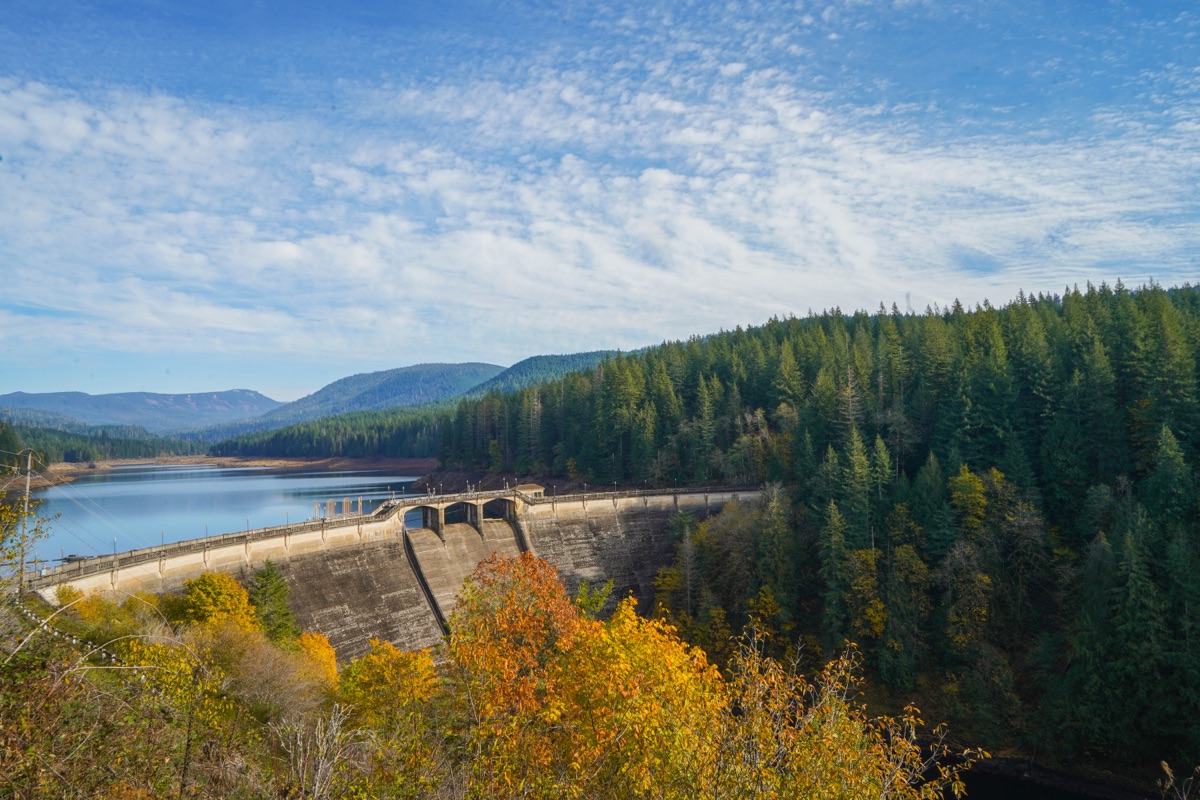
Can a Cyberattack Actually Contaminate Drinking Water?
In principle, yes, and that is why federal agencies treat this as urgent. Programmable logic controllers do more than report readings. They run pumps and chemical feed equipment, so control over them is partial control over the treatment process itself.
That is not what agencies reported here. The effects the FBI listed are operational: Operational effects reported to the FBI have included loss of pressure and flooding.
And the contamination pathway the FBI names is indirect rather than a change to treatment: Pressure loss in water systems could potentially allow untreated ground water to seep into pipes.
Read that sentence carefully, because it is the whole story. Could potentially. Pressure is what keeps outside water out of your pipes. Drop the pressure and the barrier weakens, which is the same reason a broken main triggers a boil-water notice. The attack is a new way to cause an old problem.
Several things sit between an intrusion and a contaminated tap, and they are why no agency has reported contamination from these incidents: treatment chemistry that holds a disinfectant residual in the pipes, routine sampling, operators who switched to running plants by hand, and precautionary notices issued before anyone waited to find out.
The part that deserves more attention than the headlines gave it: the FBI reported that at least one organization found its controller program files modified after noticing discrepancies in the logic across several sites. Changing how equipment behaves is a more serious capability than locking an operator out of it, and it is why these advisories read as urgently as they do.
Confirmed, Unconfirmed, and Undetermined
Coverage of this story has blurred what agencies stated with what commentators inferred. Here is the split, with the source for each line. All three documents were published July 30, 2026, and are cited in full at the end of this article.
| Claim | Status | Source |
|---|---|---|
| Utilities in at least seven states reported incidents, starting July 27, 2026 | Confirmed | FBI/EPA |
| Attackers changed passwords and IP addresses on internet-facing controllers | Confirmed | FBI/EPA, CISA |
| Effects included loss of pressure and flooding | Confirmed | FBI/EPA |
| Boil-water notices were issued as a result | Confirmed | CISA |
| More than 30 Minnesota community water systems were affected | Confirmed | MNIT |
| Pressure loss could let untreated groundwater seep into pipes | Risk pathway, not an outcome | FBI/EPA |
| Drinking water was contaminated | Not reported | No agency |
| A specific country or group was responsible | Not determined | MNIT, FBI |
On that last line: a separate joint advisory published April 7, 2026 did cover Iranian-affiliated actors exploiting programmable logic controllers across US critical infrastructure. Coverage has connected the two. That earlier advisory is not a finding about July, and no agency has closed the gap between them.
How to Check Whether Your Water System Was Affected
National reporting names almost none of the affected utilities, so the headline cannot answer your question. Four things can.
1. Your utility is required to tell you
Under EPA's Public Notification Rule, a system facing a situation with potential for immediate health impact has 24 hours to notify the people who drink its water. That is a Tier 1 notice, and it goes out by broadcast media, posting in public places, personal delivery, or a state-approved equivalent. Check the channels that notice would arrive through rather than assuming silence means everything is fine.
2. Go to the utility directly
Your water provider's own website and social accounts are the fastest accurate source. The provider is named on your water bill. Sign up for its alert list while you are there, which is the single highest-value thing to do after reading this.
3. Check your state health department
State drinking water programs coordinate these notices. Minnesota residents can follow the Minnesota Department of Health, which has been working directly with affected systems.
4. Know your system's baseline
An event like this is a good moment to learn what is normally in your water, which is a separate question from whether this week was unusual. Look up your city's contaminant data on our water quality reports, and check whether your utility has a history of violations with our guide to checking your utility's compliance record.
What to Do When Your Utility Issues a Notice
A boil-water notice from a cyber incident is handled exactly like one from a broken main, because the underlying hazard is the same: pressure could not be guaranteed. Boil water at a rolling boil for one minute, three minutes above 6,500 feet, and use boiled or bottled water for drinking, cooking, ice, brushing teeth, and infant formula until the utility lifts it. That is CDC guidance.
The mistake worth avoiding is trusting the filter you already own. Standard carbon pitcher, fridge, and under-sink filters are not designed to remove bacteria or viruses, and reverse osmosis is not certified for microbiological contamination unless it includes a UV stage. Replace any filter cartridge that was in use during an active notice, since bacteria can colonize the media. Our complete boil-water action guide covers showering, laundry, pets, and what to do once it is lifted.
Households that want a buffer for the next one, whatever causes it, should read our emergency water storage guide. Stored water costs nothing to keep and removes the scramble.
Why This Keeps Happening
The vulnerability here is mundane. These controllers were reachable from the open internet, in some cases through cellular modems that a vendor or integrator installed and nobody wrote down. CISA's guidance is not sophisticated: disconnect them from the internet, change default passwords, restrict which addresses can talk to them. The reason that guidance needed issuing at all is that thousands of small utilities run lean, on equipment bought decades ago, with no dedicated security staff.
That is the same underfunding story behind the ordinary version of this problem. Most boil-water notices in the US follow pressure loss from aging pipes, pump failures, and construction, and they arrive constantly without anyone attacking anything. We tracked that pattern in why boil-water advisories keep hitting US cities in 2026, and the funding gap underneath it in our look at the aging-pipe infrastructure crisis.
The honest summary of the past week: a new attacker found a new way to trigger a failure the sector already has plenty of practice absorbing. The system held. It held partly because operators could still run the plants by hand, which is a thin margin to be relying on, and the reason both agencies spent most of their advisories telling utilities to make sure that capability still works.
For the broader question this raises for most readers, our data-led answer to is tap water safe to drink in 2026 is the better starting point than any single week of news.
Frequently Asked Questions
Can hackers contaminate my tap water?
Was drinking water actually contaminated in the July 2026 cyberattacks?
How do I know if my water system was affected?
Does a water filter protect me if my utility is hacked?
Who was behind the water system cyberattacks?
Should I stop drinking my tap water because of this?
Sources & References
- FBI / EPA: Malicious Cyber Actors Targeting Water and Wastewater Sector Internet-Facing Programmable Logic Controllers (PSA, July 30, 2026)
- CISA: CISA Urges Water and Wastewater Systems Sector to Protect OT Against Activity Targeting PLCs (July 30, 2026)
- Minnesota IT Services: Minnesota continues response to cyber activity affecting community water systems (July 30, 2026)
- CISA: Iranian-Affiliated Cyber Actors Exploit Programmable Logic Controllers Across US Critical Infrastructure (AA26-097A, April 2026)
- US EPA: Public Notification Rule: Tier 1, 2, and 3 notification requirements
- CDC: Making Water Safe in an Emergency (boil guidance)