What Hard Water Actually Does to Your Home
How hard water damages plumbing, reduces appliance lifespan, and costs you money. and what the real solutions are.
If your faucets have white crusty buildup, your skin feels dry after showering, or your water heater is losing efficiency, you almost certainly have hard water. It is the most common water quality complaint in the United States, affecting roughly 85% of households to some degree.
Hard water is not a health hazard. The calcium and magnesium that cause it are minerals your body needs. But the household damage is real, measurable, and cumulative. Left untreated, hard water costs the average home between $400 and $1,200 per year in scale damage, wasted energy, and premature appliance failure.
How to Tell If You Have Hard Water
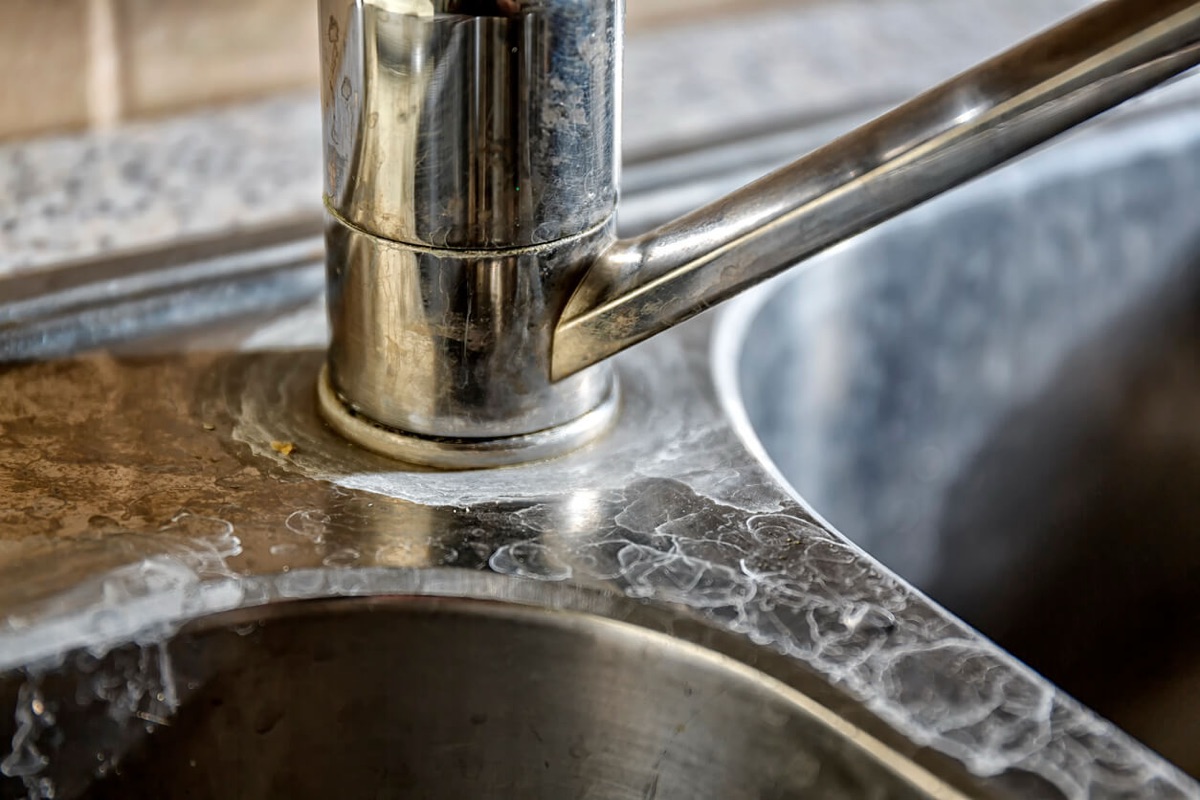
The signs are easy to spot once you know what to look for. White or yellowish scale on faucets, showerheads, and around drains is the most obvious indicator. You may also notice soap that does not lather well, a film on glass shower doors, stiff or dingy laundry, dry skin and flat hair after bathing, or spots on dishes even after washing.
If you want a precise number, the simplest option is a home test strip. A basic hardness test kit costs under $15 and gives results in seconds. Your city's annual water quality report (also called a CCR) will list hardness, but the number at your tap can differ depending on your plumbing and whether you are on a well. For a detailed explanation of what the numbers mean, see our Water Hardness reference page.
What Hard Water Actually Costs You
Scale buildup inside pipes and appliances is the primary expense. A water heater coated in scale uses 25% to 40% more energy to heat the same amount of water, according to studies by the U.S. Department of Energy. That translates to $50 to $200 per year in wasted electricity or gas depending on your heater type and local rates.
Appliance lifespan takes a direct hit as well. Tankless water heaters, dishwashers, and washing machines in hard water homes fail years earlier than their rated lifespan. Replacement and repair costs add up quickly. You will also spend more on soap, shampoo, and cleaning products because hard water reduces their effectiveness by 50% or more.
Your Options: What Actually Works
There are two main approaches, and choosing the right one depends on your hardness level and what you want to achieve.
Salt-based water softeners
This is the standard solution for moderate to very hard water (above 7 GPG or 120 PPM). A salt-based softener uses ion exchange to physically remove calcium and magnesium from the water, replacing them with sodium. The result is genuinely soft water that eliminates scale, improves soap performance, and protects appliances. The tradeoff is ongoing salt purchases (roughly $5 to $10 per month), a drain connection for regeneration, and a small amount of added sodium in the water. See our Salt-Based Water Softener guide for sizing, costs, and our top picks.
Salt-free conditioners
If your hardness is moderate (under 15 GPG), you do not want to add sodium, or local regulations restrict salt-based systems, a salt-free conditioner is the alternative. These systems do not remove hardness minerals. Instead, they use template-assisted crystallization (TAC) to change the mineral structure so it does not stick to surfaces as easily. You will still see some spotting on glass, but scale buildup in pipes and appliances is significantly reduced. No salt, no drain, no electricity, and virtually no maintenance. See our Salt-Free Conditioner guide for details.
What does NOT work
Magnetic or electronic water conditioners marketed as "no-salt softeners" have no credible independent testing supporting their effectiveness. Whole-house carbon filters do not address hardness at all. Reverse osmosis removes hardness but is typically used at a single tap (kitchen sink) rather than whole-house, and is better suited for contaminant removal than softening. If your primary concern is hard water, a softener or TAC conditioner is the correct path.
Choosing the Right System for Your Home
Start with your hardness number. If you do not have it, use the test strip method above or look up your city in our database.
Under 7 GPG (120 PPM): Your water is only slightly hard. A salt-free conditioner is usually sufficient and requires less maintenance. Some households at this level choose to do nothing.
7 to 15 GPG (120 to 250 PPM): Moderately hard. Either a salt-based softener or a salt-free conditioner will help. If you want completely soft water and maximum appliance protection, go salt-based. If you want low maintenance and are OK with some residual spotting, go salt-free.
Over 15 GPG (250+ PPM): Very hard. A salt-based softener is the clear recommendation at this level. Salt-free conditioners struggle to keep up with this concentration.
Not sure which system is right for your home? Our Water Treatment Quiz walks you through the decision in about 60 seconds based on your specific water conditions and household needs.